Looks like you’re on the UK site. Choose another location to see content specific to your location


Rutgers Team Uses Mosquito Waste for Viral Surveillance
21st September 2026
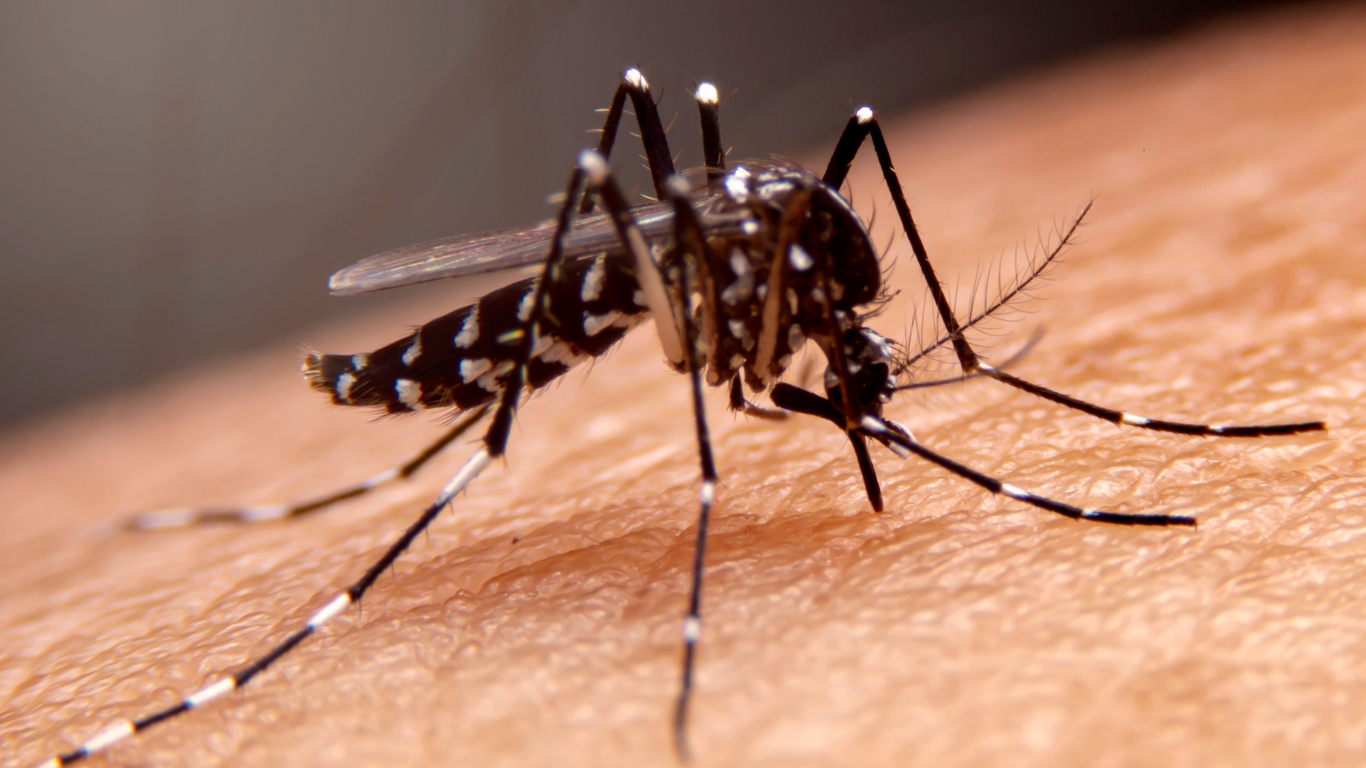
Researchers at Rutgers University have demonstrated a novel viral surveillance technique using mosquito excrement collected by a 3D-printed “mosquito toilet” and analysed via metagenomic sequencing. Published in Microbiology Spectrum on 18 September 2026, the proof-of-concept study recovered a complete West Nile virus genome, identified the first known Americas evidence of a Hedwig-like virus, and detected several potentially new viruses.
The device developed by the Rutgers team, led by Associate Professor Dana Price at the Center for Vector Biology, is a 3D-printed funnel coated with a superhydrophobic material that causes mosquito waste droplets to bead up and slide into a collection tube. Two groups of 50 wild Culex mosquitoes from New Brunswick, New Jersey were placed above the funnel and fed a sugar solution. Shotgun metagenomic sequencing was then applied to characterise all genetic material present. The 2022 sample yielded a complete West Nile virus genome corresponding to the NY07 genetic variant previously found in the region, plus evidence of a Hedwig-like virus, previously reported only in European snowy owls.
The approach also identified a partiti-like virus, a picorna-like virus, a possible new virus associated with mosquito parasites, and trypanosomatid parasites. The technique replaces traditional labour-intensive processes of crushing pooled mosquitoes for pathogen-specific testing, and by capturing all genetic material rather than searching for pre-specified pathogens, offers a more sensitive early-warning surveillance platform for novel viruses. The Rutgers team is developing a field-ready trap and envisions autonomous devices that continuously sequence genetic material and transmit surveillance data in real time.
The commercial signal is a nascent vector-borne disease surveillance category where metagenomic sequencing platforms and autonomous field-ready traps could substantially reshape public health infrastructure. Growing global concern over vector-borne disease spread amplifies commercial opportunity. Expect Illumina, Oxford Nanopore, Pacific Biosciences, Thermo Fisher, Roche, Danaher (Cepheid), and vector control specialists Bayer and Syngenta to sharpen positioning across this emerging surveillance category through 2027.
For the latest updates and in-depth insights into the world of Life Science, including breakthrough treatments, industry trends, and regulatory news, contact Bailey Osborne today!
We have hundreds of jobs available across the Healthcare industry, find your perfect one now.
Stay informed
Receive the latest industry news, Tips and straight to your inbox.
- Share Article
- Share on Twitter
- Share on Facebook
- Share on LinkedIn
- Copy link Copied to clipboard